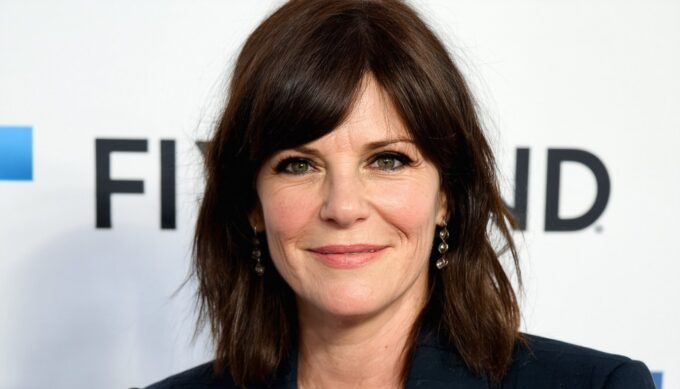


The Goddard name is synonymous with Hollywood—and not without good reason. Amid the constellation of Tinseltown’s storied dynasties, Caleb James Goddard stands as a figure whose biography weaves together the legacies of acclaimed actors, shifting family dynamics, and the realities of being born into cultural privilege. As the son of Jack Nicholson and Susan Anspach, Goddard’s story serves not only as a fascinating insight into celebrity lineage but also as a study in personal identity forged under the weight of expectation.
While not as publicly visible as his famous parents, Caleb James Goddard’s journey reflects both the allure and the challenges faced by the children of celebrated figures. More than just a footnote in Hollywood history, his life invites a closer look at the interplay between fame, privacy, and self-determination.
Family Roots: Hollywood Dynasties and Complex Relationships
Few families typify the intertwining of fame and controversy quite like the Goddard-Nicholson-Anspach lineage. Caleb was born in 1970, the result of a relationship between Jack Nicholson, the legendary actor known for his roles in “One Flew Over the Cuckoo’s Nest” and “The Shining,” and Susan Anspach, an accomplished actress in her own right, celebrated for performances in films like “Five Easy Pieces.”
Jack Nicholson has long been considered one of cinema’s greatest icons, but his personal life was marked by ambiguity regarding his paternity of Caleb. Nicholson reportedly did not publicly acknowledge Caleb as his son during the actor’s early life, a fact that was widely discussed in various interviews and entertainment media throughout the 1970s and 80s. Instead, Susan Anspach raised Caleb, at times with the support of her then-husband, Mark Goddard, who ultimately gave Caleb his surname.
“Being the child of movie royalty is not a guarantee of recognition or clarity; often, it creates as many questions as it answers.”
Beyond this headline tension, Anspach went public with her account of Nicholson’s role, notably in a 1996 interview with People Magazine, affirming that Nicholson had privately supported Caleb but never took the step of public acknowledgment. The nuanced relationship painted a portrait of a young man growing up adjacent to, but not fully immersed in, the classic Hollywood narrative.
Education and Early Career: Paths Away from the Spotlight
Unlike many celebrity offspring drawn to the entertainment industry, Caleb James Goddard maintained a relatively low profile throughout his formative years and beyond. He graduated from Georgetown University, a testament to his focus on education rather than immediate fame.
Choosing a career behind the scenes, Goddard is reported to have carved out a niche in writing and production rather than acting. His early work included behind-the-camera roles, such as script readings, consultations, and project development. This path is emblematic of a broader trend among children of celebrities who seek creative control without public scrutiny.
There is limited public documentation of major productions directly credited to Caleb James Goddard, but his positioning in the industry echoes many second-generation Hollywood professionals who gain footing via the connections, knowledge, and cultural capital inherited from their parents. This less-visible footprint suggests a conscious choice to engage with the arts on his own terms rather than leveraging his lineage for instant celebrity.
The Role of Family Legacy in Career Choices
Hollywood has a well-documented tradition of dynastic influence, yet the patterns are shifting. Many children of noteworthy stars now opt for more private or diversified careers:
- Some move into auxiliary roles in entertainment, such as production, writing, or directing.
- Others establish careers entirely outside the industry, in fields such as law or philanthropy.
- Personal discretion and carefully curated public profiles serve as protective mechanisms against media scrutiny.
In this context, Caleb’s choices mirror a modern sensibility—a desire to balance personal achievement with the attendant pressures of legacy.
Private Life: Navigating Fame and Privacy
Privacy emerges as a consistent theme in Caleb James Goddard’s biography. Despite his high-profile parentage, he has largely eschewed public appearances and interviews. This approach reflects a broader trend in the children of actors and celebrities during the digital era, where the proliferation of social media makes sustained privacy an extraordinary accomplishment.
There is little publicly available information regarding his immediate family, relationships, or present location. Speculation about recent activities abounds, but verifiable details remain scarce—an intentional absence of public markers that some view as a form of self-protection.
Experts in celebrity culture often point to the increasing number of prominent offspring forging divergent paths from their parents.
“The modern celebrity child understands the importance of boundaries—and the necessity of carving out an identity independent of family mythologies,” observed a cultural commentator for The Hollywood Reporter.
In a world obsessed with lineage and access, Caleb’s minimal media presence reveals a measured strategy for agency and self-definition.
Impact and Legacy: The Unwritten Pages
Although Caleb James Goddard’s name may never eclipse the iconic status of his father or mother, his story resonates for different reasons. His life, marked by discretion and a conscious avoidance of the limelight, highlights the diversity of stories emerging from Hollywood’s second generation.
While some celebrity children embrace the culture of notoriety, others, like Caleb, become exemplars for those seeking fulfillment and accomplishment away from the relentless gaze of fame. In an era where personal privacy is increasingly scarce, his choices are instructive for anyone navigating powerful legacies.
The Evolving Notion of Celebrity Heritage
The broader entertainment industry is witnessing an evolution in how family legacies are managed. High-profile examples, from the Coppolas to the Fondas, demonstrate varying degrees of public engagement. With his discretion, Caleb occupies a unique space: a reminder that personal legacy can be shaped as much by what is withheld as what is shared.
Conclusion: An Enduring Story Beyond Fame
Caleb James Goddard’s biography resists simple categorization. Blending the currents of heritage, privacy, and individual purpose, his journey reflects a conscious steering of life’s narrative beyond the spotlight. In a society driven by celebrity culture, Caleb’s quieter approach underscores the power of personal agency and the value of defining one’s path from within.
For those curious about celebrity lineages, Goddard’s story is proof that legacies can be honored—and sometimes redefined—by discretion and authenticity.
FAQs
Who are Caleb James Goddard’s parents?
Caleb is the son of Susan Anspach, an acclaimed film and stage actress, and Jack Nicholson, the legendary Hollywood actor. He was given the surname Goddard from Susan Anspach’s then-husband, Mark Goddard.
Is Caleb James Goddard involved in the entertainment industry?
While he is known for staying out of the public eye, Caleb has worked behind the scenes in the entertainment field, focusing on writing and production rather than acting.
Why is Caleb James Goddard’s paternity often mentioned in media?
Much of the attention stems from Jack Nicholson’s reluctance to publicly acknowledge Caleb as his son during Caleb’s youth, which led to longstanding media interest and speculation about family dynamics.
Has Caleb James Goddard spoken publicly about his family?
Caleb maintains an extremely low public profile and has given few if any public interviews regarding his parents or personal life, opting to preserve his privacy.
Does Caleb James Goddard have any siblings?
Through his parents, Caleb has half-siblings, although details about ongoing relationships or family connections are largely private and seldom discussed in public forums.