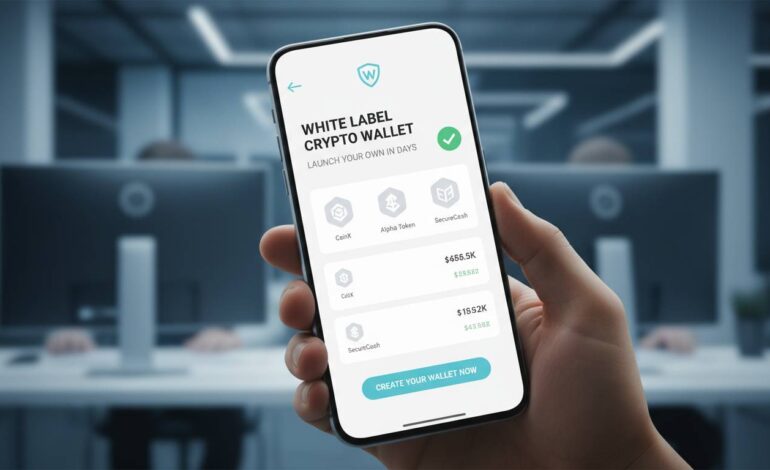
White Label Crypto Wallet – Launch Your Own in Days ✓

The cryptocurrency world moves fast, and building a wallet from scratch takes months—if not longer. That’s why more businesses are turning to white label solutions. Instead of hiring a team of blockchain engineers, companies can launch a branded crypto wallet in weeks, under their own name, with their own logo. It’s a shortcut that’s become almost essential for anyone wanting to get into the space without the headache of building infrastructure.
This guide walks through what white label wallets actually offer, what they cost, and how to pick the right provider.
What Is a White Label Crypto Wallet?
A white label crypto wallet is essentially a ready-made product. You partner with a company that already built the technology—blockchain connections, private key management, transaction processing—and you put your brand on it. Your customers see your logo, your colors, your name. They never know you didn’t build it yourself.
The typical setup includes multi-currency support (dozens of cryptocurrencies), transaction history, real-time price data, and some form of secure login. The provider handles the messy blockchain stuff: network fees, address generation, broadcasting transactions to the chain. You focus on serving your customers.
This approach has caught on with exchanges, fintech startups, and even some traditional financial institutions testing the waters with digital assets. It’s popular precisely because it lets you launch fast without maintaining a team of blockchain developers.
What Features Can You Expect?
Most white label wallets come with a standard set of capabilities. Here’s what you’ll typically find:
Core functionality:
– Support for multiple cryptocurrencies from one interface
– Private key management (usually with the provider handling security)
– Send, receive, and swap capabilities
– Transaction history and account statements
– Real-time market data and price charts
Security:
– Two-factor authentication
– Biometric login (fingerprint, Face ID)
– Multi-signature transactions for larger amounts
– Cold storage options for businesses wanting extra protection
Customization:
– Your logo, colors, and branding throughout
– Custom messaging and onboarding flows
– API access to integrate with your existing apps or build new features on top
The security features matter. There have been plenty of high-profile hacks in crypto—lost keys, exploited bridges, compromised hot wallets. Reputable providers take this seriously, but you still need to do your homework. More on that later.
How Much Does It Cost?
This is where things get messy. Pricing varies wildly depending on what you need.
| Cost Component | Typical Range |
|---|---|
| Base licensing fee | $10,000 – $50,000+ |
| Monthly subscription | $500 – $5,000+ |
| Integration and setup | $2,000 – $15,000 |
| Ongoing maintenance | $500 – $2,000/month |
Some providers charge one-time fees. Others work on subscriptions. A few let you start cheap and pay more as you add features or users.
The big picture: it’s nowhere near as expensive as building from scratch. Custom wallet development can easily hit $200,000–$500,000 and take over a year. White label gets you there for a fraction of that.
But watch for hidden costs. Transaction fees, KYC/AML compliance tools, extra support—these add up. Get a clear picture of total cost before signing.
How Long Does It Take?
If you’re wondering whether you can launch before your competitors beat you to market, this is the part you’ll like.
Custom development: 12–18 months, minimum.
White label: 2–8 weeks, depending on how much you want to customize.
The process usually goes like this:
- Pick a provider and sign up
- Technical integration — APIs, connecting to your systems
- Branding — apply your visual identity
- Testing — make sure everything works
- Launch
Most providers hand you documentation, developer support, and someone to call when things break. That’s the trade-off: you’re fast, but you’re also dependent on someone else’s infrastructure.
Regulatory and Security Stuff
Let’s be honest—crypto regulation is a mess. It varies by country, changes often, and nobody fully agrees on what rules apply.
Most white label providers build in compliance features:
- KYC (Know Your Customer) verification
- AML (Anti-Money Laundering) screening
- Transaction monitoring
- Geographic restrictions
You’ll still need a lawyer. Different jurisdictions have different requirements, and it’s on you to make sure you’re following the rules in wherever you operate.
Security is the other big concern. Here’s what to ask providers about:
- Encryption standards
- Key management—who holds the keys, exactly?
- Whether they do regular security audits
- Insurance coverage (yes, really)
- What happens if they get hacked
The reality: you’re sharing security responsibility with your provider. Make sure you understand exactly where your obligations end and theirs begin.
Picking the Right Provider
Not all white label providers are equal. Some are well-funded companies with years of experience. Others are small teams that might not be around in two years.
Here’s what to evaluate:
Track record: How long have they been around? Who are their clients? Can you talk to existing customers?
Technical setup: Check their API docs. See what languages they support. Make sure it’ll actually integrate with your systems.
Security: Ask for audit reports. Find out their incident history. Understand their key management setup.
Support: When things go wrong at 2am, who do you call? What’s their response time?
Roadmap: Are they adding new coins? What about Layer 2 networks, DeFi integration? You don’t want to get stuck with a provider who’s standing still.
Scalability: Can they handle your projected user growth, or will you need to migrate later?
Get proposals from several providers. Run a small pilot if you can. Talk to their existing customers before committing.
Common Questions
Do I need blockchain expertise?
No—that’s the point. The provider handles all the blockchain complexity. You just need to be comfortable with basic API integration.
Can I add my own features?
Most providers offer APIs that let you build custom functionality on top. The question is how much work that requires. Ask about their SDK and extension capabilities.
What happens if the provider goes out of business?
This is a real risk with smaller providers. Ask about data portability—can you export your users and their keys if needed? Bigger, established providers tend to have better answers here.
How do transaction fees work?
Usually, users pay network fees (gas on Ethereum, for example). The provider may also charge a markup or take a spread on exchanges. Get this crystal clear.
Can I start small and scale up?
Most providers offer tiered pricing. You can typically start with basic features and add more as your user base grows.
Getting a white label crypto wallet up and running is genuinely one of the faster paths into the crypto space. But speed only matters if you’ve picked a provider you can trust. Take your time on due diligence. The right partner makes all the difference.